
Antique Rug Restoration Auckland
Specialist Conservation for Faded, Fragile & High-Value Heritage Rugs
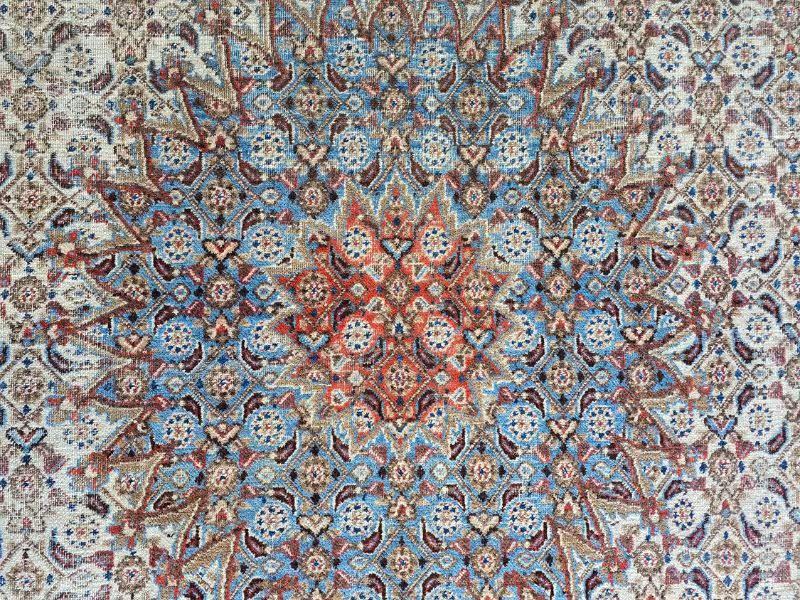
Antique rugs require a highly controlled conservation approach due to their age, material instability, and complex dye behaviour. These are not ordinary furnishings — they are handwoven textile works that often carry cultural, historical, or collector significance.
At The Rug Guru, we specialise in conservation-led antique rug restoration, focused on improving visual clarity, stabilising aged fibres, and carefully restoring faded tonal balance while preserving original craftsmanship, patina, and material identity.
This service is designed for antique rugs that are:
- Structurally stable or gently weakened through age
- Visually faded, uneven, or oxidised
- Experiencing loss of pattern clarity or tonal depth
- At risk of long-term value decline due to UV exposure or ageing effects
Free pick-up across Auckland
Why Antique Rugs Require Specialist Conservation
Antique rugs differ fundamentally from modern handmade rugs due to long-term material behaviour and ageing processes.
They commonly contain:
- Natural vegetable dyes with unpredictable ageing patterns
- Hand-spun wool or silk that becomes increasingly fragile over time
- Historic weaving structures no longer widely produced
- Subtle previous restorations that may affect dye stability
Because of this, antique rugs require conservation-level handling rather than standard restoration methods.
Incorrect treatment can result in:
- Permanent dye migration or tonal imbalance
- Fibre breakdown from chemical or mechanical stress
- Loss of authenticity and collector value
- Artificial or over-processed appearance
In antique textiles, even minor interventions must be precisely controlled.
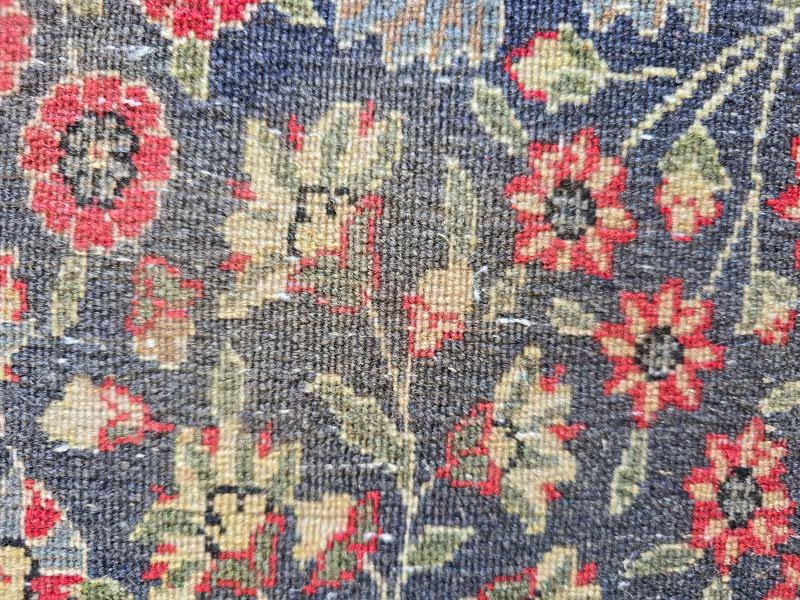
Where structural damage is present, repairs such as reweaving, hole reconstruction, fringe restoration, or edge stabilisation are typically completed before visual restoration begins. Once structural areas are stabilised, conservation techniques are applied to visually integrate repaired sections with the surrounding rug while preserving colour harmony, pattern continuity, and historical authenticity.
Core Focus of Antique Rug Conservation
Our approach prioritises preservation over transformation:
- Stabilising fragile and aged fibres
- Carefully improving faded tonal balance
- Restoring visual clarity without over-saturation
- Preserving natural patina and ageing character
- Protecting historical and financial value
The goal is controlled visual revival, not cosmetic renewal or artificial reconstruction.
A well-conserved antique rug should still feel like an antique rug — just visually more balanced and readable.
Antique Rug vs Standard Rug Restoration Differences
Antique rug restoration is fundamentally different from standard rug restoration because it deals with long-term material ageing, not just surface-level wear or damage.
Standard restoration typically focuses on visible repair and aesthetic improvement, while antique conservation focuses on material behaviour over time, including fibre degradation, oxidation, and structural instability caused by age.
Key Focus in Antique Rug Restoration
The primary focus is the long-term degradation of materials, including:
- Age-related fibre fragility in wool and silk
- Oxidation changes affecting dye stability and tone
- UV fading developed over decades of exposure
- Loss of natural patina balance across the surface
- Material instability in historic handwoven structures
What is Actually Being Corrected
Antique restoration does not aim to make a rug look new. Instead, it addresses controlled visual and structural imbalance caused by ageing:
- Fibre fragility and weakened structural zones
- Uneven oxidation patterns across the rug surface
- UV fading and tonal breakdown over time
- Loss of patina harmony and aged surface character
- Instability in aged wool and silk behaviour
Primary Restoration Objective
The core objective is:
Preserving historical character while improving visual readability.
This ensures the rug remains authentic in appearance and material identity while restoring visual balance for display and use.
Common Antique Rug Issues We Restore
We regularly work on antique rugs affected by:
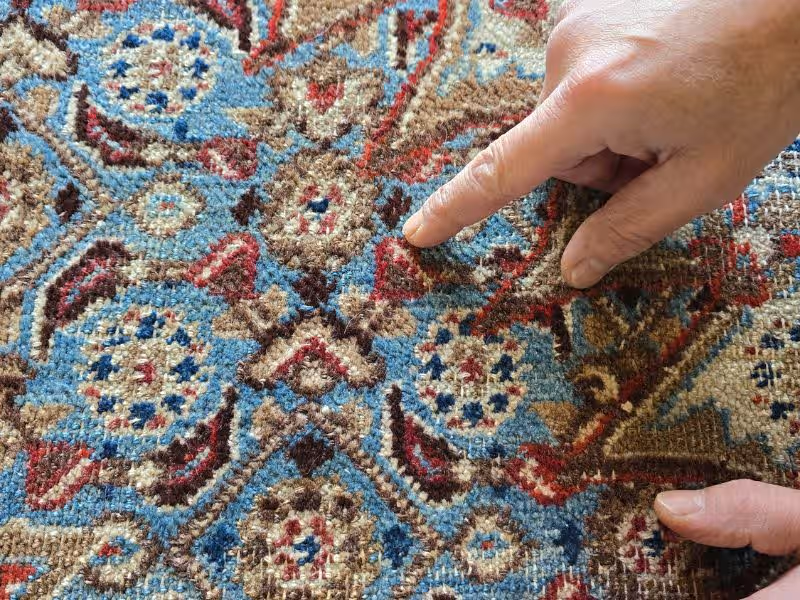
- Sun fading and UV exposure damage
- Uneven tonal degradation across design fields
- Oxidation-related dullness in wool and silk
- Loss of motif clarity over time
- Patchy or inconsistent colour zones
- Age-weakened fibre structure in foundations
- Previous improper cleaning or restoration attempts
These changes typically occur gradually over decades of light exposure and environmental ageing.
Conservation-Led Restoration Philosophy
All antique rug work is performed using strictly controlled methods:
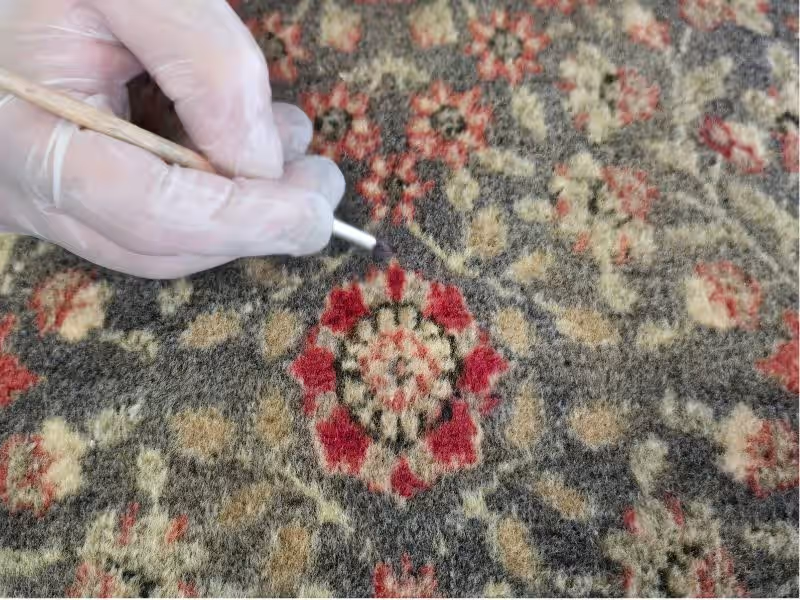
- Hand-applied conservation techniques only
- Fibre-safe tonal balancing methods
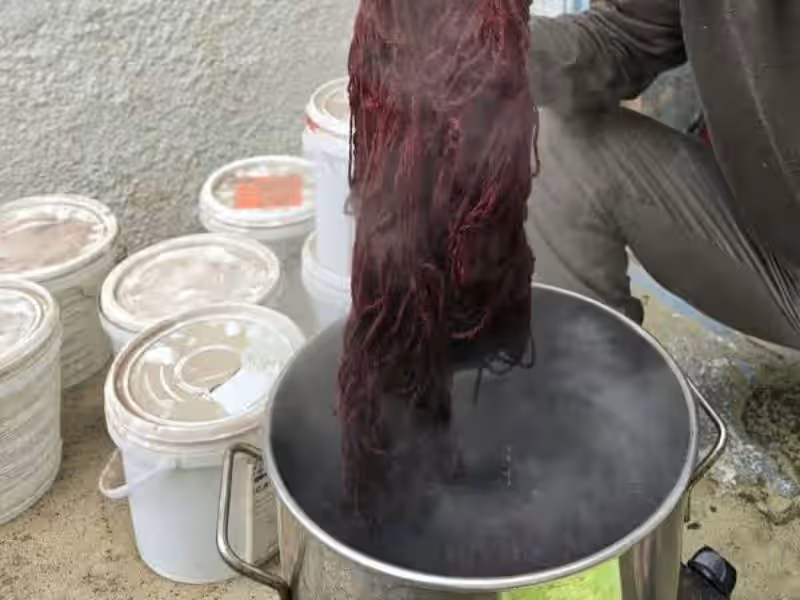
- Individual dye and fibre analysis for every rug
- Minimal-intervention restoration approach
- Controlled colour revival (never full recolouring)
- Preservation of original dye behaviour and surface patina
We do not use aggressive dye replacement, synthetic saturation, or machine-based recolouring systems.
A key principle in antique work is restraint — knowing how little to do, not how much.
What Antique Rug Restoration Can Improve
When appropriate and safe, restoration may improve:
- Colour depth and tonal richness
- Visual balance across faded areas
- Pattern visibility in worn or softened sections
- Surface harmony and consistency
- Overall aesthetic presence in interior environments
Important:
Antique conservation does NOT aim to make a rug look new. It aims to restore visual stability while respecting age, material history, and originality.
Types of Antique Rugs We Restore
We specialise in the conservation of:
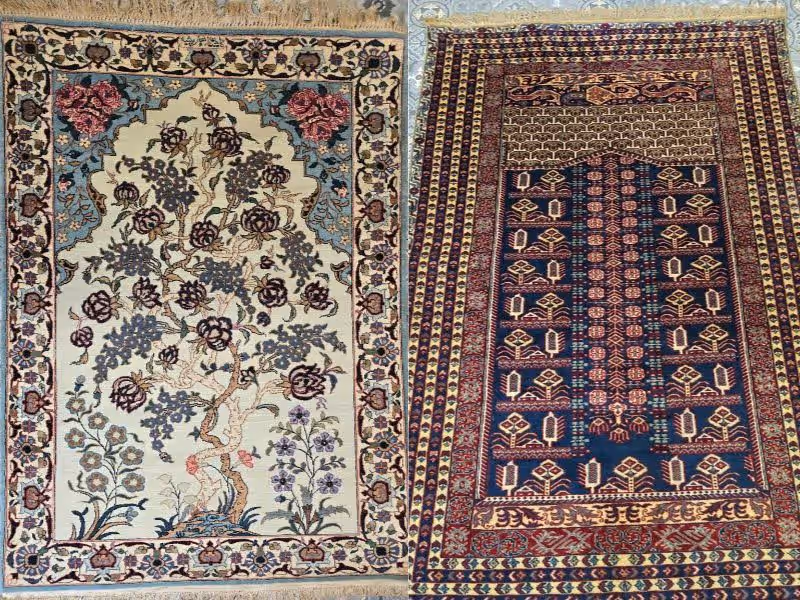
- Antique Persian rugs
- Antique Oriental rugs
- Tribal handwoven rugs
- Silk antique rugs
- Wool heritage rugs
- Family heirloom rugs
- Collector-grade antique rugs
- Decorative vintage handmade rugs
Each rug is individually assessed before any restoration recommendations are made.
Our Antique Rug Conservation Process
1. Conservation Assessment
This determines whether full conservation, partial restoration, or stabilisation-only treatment is appropriate. |
2. Dye & Fibre Analysis
This ensures all work is safe, controlled, and historically appropriate. |
3. Controlled Conservation Work
All work is gradual and continuously monitored to avoid over-processing. |
4. Final Conservation Review
Final work is reviewed to ensure colour balance, fibre integrity, and historical authenticity. |
What We Avoid in Antique Rug Conservation
To protect authenticity and long-term value, we avoid:
- Heavy synthetic recolouring
- Machine dye saturation systems
- Artificial brightening or bleaching techniques
- Over-restoration of naturally aged areas
- Excessive fibre manipulation
- Harsh chemical treatments
Preservation integrity always takes priority over visual perfection.
Specialist Rug Care Services
- Rug Repair Auckland — Structural damage beyond cleaning scope
- Rug Protection — Full protection againist storage
- Rug Edging & Binding Auckland — Edge reinforcement system
- Carpet Overlocking Auckland — Machine carpet edge sealing
Other Related Services
Why Choose The Rug Guru
- 34+ years of specialist rug conservation experience
- Deep expertise in antique textile behaviour
- Controlled fibre-safe restoration methods
- Strong understanding of natural dye instability
- Preservation-first conservation philosophy
- Auckland-wide pickup and delivery
- Individual assessment for every antique rug
Service Areas
We provide antique rug conservation across:
Central Auckland, North Shore, East Auckland, South Auckland, West Auckland
Free pickup and delivery available.
Antique Rug Restoration FAQs – Auckland
Can all antique rugs be restored?
No. Restoration depends on dye stability, fibre condition, and age-related structural integrity.
Will my antique rug look brand new?
No. Proper conservation preserves age, patina, and character while improving visual clarity.
Is colour restoration safe for antique rugs?
Yes, but only under controlled, minimal-intervention conservation methods.
Do you work on very old Persian rugs?
Yes. Each rug is individually assessed for fibre and dye stability before any work is carried out.
Preserve the history, value, and visual clarity of your antique rug
If your antique rug has faded, dulled, or lost tonal balance over time, we can assess whether controlled conservation is suitable.